
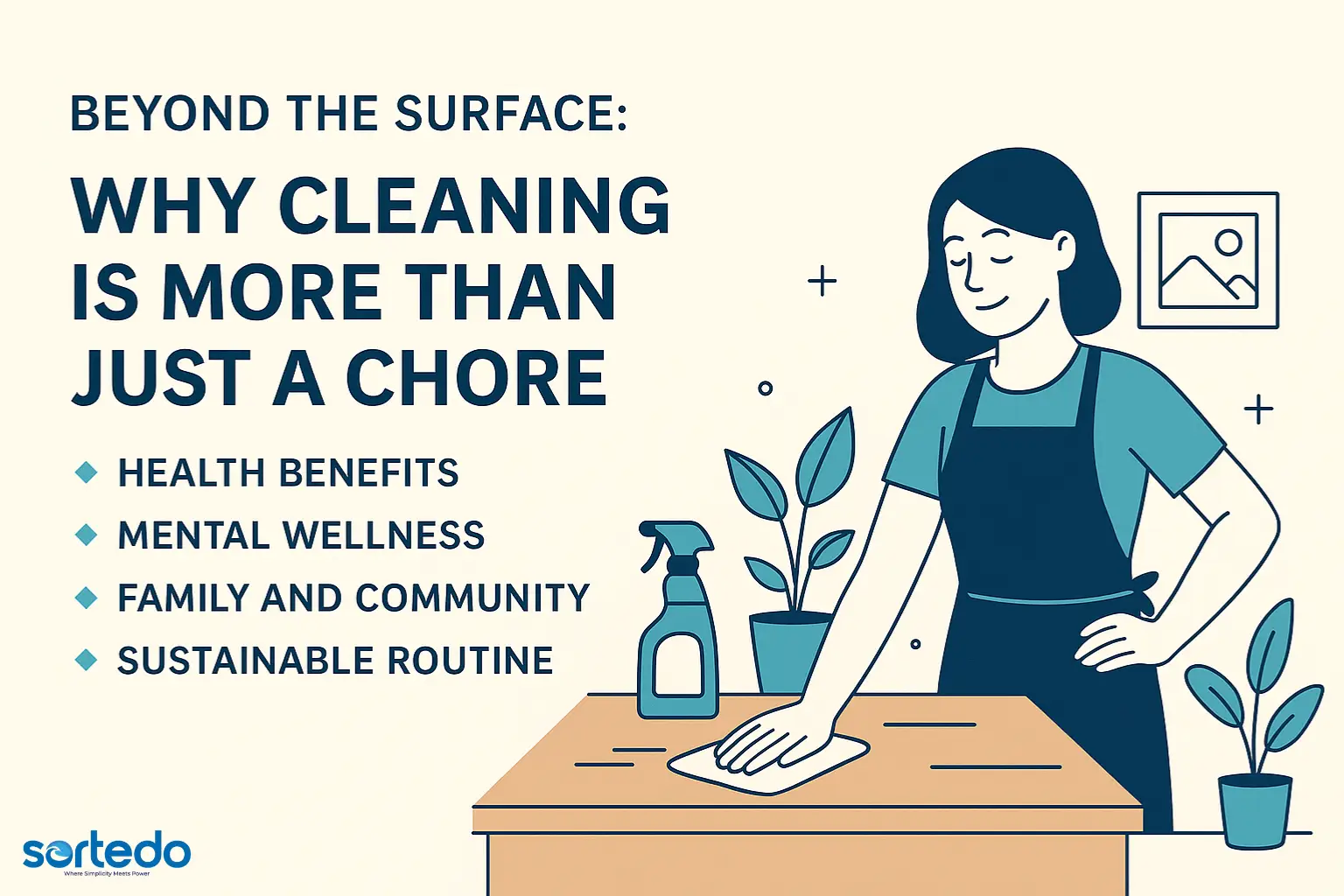
Beyond the Surface: Why Cleaning Is More Than Just a Chore
Introduction
Cleaning is one of those things we all do — some more willingly than others. Whether it’s wiping a kitchen counter, vacuuming the floor, or organizing a closet, it often feels like just another box to check off the to-do list. But what if we told you that cleaning is more than just a routine task? What if the act of cleaning was actually shaping your health, your mindset, and even your relationships?
We often associate cleaning with neatness, but the benefits of a clean space go far beyond appearances. It can protect you from invisible threats like bacteria, elevate your mood, and even teach life skills. In this blog post, we’ll go beyond the surface to explore why cleaning matters — not just to your home, but to your entire well-being.
The Science of Clean
Let’s start with the basics: what does it really mean to clean something? While most people lump cleaning, disinfecting, and sanitizing into the same category, they actually serve different purposes Cleaning is the process of clearing away noticeable dust, grime, and mess — giving surfaces a visibly neat and tidy appearance Sanitizing reduces the number of germs to safer levels, while disinfecting kills specific bacteria and viruses on surfaces. All three play unique roles in keeping your environment truly hygienic.
A common misconception is that if something looks clean, it is clean. The truth is, the things that pose the biggest risk to our health — like bacteria, allergens, and viruses — are the ones we can’t even see. High-touch surfaces like doorknobs, mobile phones, and light switches can harbor thousands of microorganisms, even if they appear spotless. Without proper and regular cleaning, these surfaces become breeding grounds for infection.
Cleaning also interrupts the “chain of infection,” a scientific model that explains how germs spread from person to person. By physically removing grime and microbial build-up, cleaning prevents germs from transferring to hands, food, or other surfaces — breaking the cycle before it starts. In essence, cleaning is the frontline defense of public and personal health.
Cleaning and Mental Wellness
The benefits of cleaning aren’t just physical — they’re deeply psychological. Have you ever felt mentally foggy in a messy room, or oddly satisfied after organizing your desk? That’s not a coincidence. There’s a strong connection between a clean environment and mental clarity.
When your surroundings are messy, your thoughts often feel the same — scattered and overwhelmed. Psychologists have found that visual chaos — like scattered papers or piles of laundry — can cause stress, anxiety, and decision fatigue. Your brain constantly processes its surroundings, and too much “visual noise” can overstimulate your senses and reduce your ability to focus.
On the flip side, the act of cleaning itself can be calming. It provides a sense of structure and control, especially in moments when life feels unpredictable. In fact, many people turn to tasks like sweeping or organizing during emotionally stressful times. It’s a way of physically restoring order in an otherwise chaotic world. Some even describe it as meditative — a moment of mindfulness in motion.
Cleaning as a Family or Community Habit
What’s scary is that the most harmful stuff — germs, allergens, even viruses — doesn’t show up to the eye. You can’t see them, but they’re still there, quietly building up around us. When shared equally, cleaning fosters a sense of cooperation, responsibility, and mutual respect.
For children, participating in cleaning routines can build discipline and self-reliance from an early age. Simple tasks like putting away toys or wiping a table can teach them about hygiene, time management, and teamwork. When framed positively, chores don’t feel like punishment — they feel like contribution.
In adult households, shared cleaning duties also play a role in balancing domestic responsibilities. Splitting chores fairly helps break outdated gender roles and encourages communication. For couples, roommates, or families, a clean space often reflects emotional harmony — while neglect or conflict can sometimes be traced to domestic imbalance.
To make cleaning more enjoyable as a group, you can introduce creative elements. Try “cleaning games” for kids with rewards, or play upbeat music to turn cleaning into a dance-off. Some families set a timer for “10-minute tidy ups” to make the process quick and engaging. Over time, these small actions build strong habits and shared standards for living spaces.
Creating a Sustainable Cleaning Routine
Consistency is the key to effective cleaning. While many people wait until dirt becomes visible or the mess becomes overwhelming, a better strategy is to follow a proactive, sustainable routine.
Start by dividing tasks into manageable timelines:
- Daily: Wipe kitchen counters, make the bed, do dishes
- Weekly: Vacuum floors, clean bathrooms, change linens
- Monthly: Deep clean appliances, wipe fans, check filters
- Seasonally: Declutter storage, clean windows, sanitize mattresses
Creating a checklist or using a simple habit-tracking app can keep you on course without adding pressure. Some people like “zone cleaning” — dedicating different days to different areas (like Monday for kitchen, Tuesday for bedroom). Others prefer short, timed sessions like the “20-minute reset” each evening to reset their space before the next day.
Remember, the goal isn’t perfection — it’s rhythm. When cleaning becomes part of your lifestyle rather than an afterthought, it feels easier, faster, and far less stressful. Over time, these habits compound into a consistently cleaner, calmer environment.
Conclusion
Cleaning is often underestimated — seen as boring, repetitive, or just another obligation. But when you step back, it’s clear that cleaning is so much more than just a chore. It protects your health, sharpens your mind, strengthens your family, and even contributes to a more sustainable world.
By understanding the deeper purpose of cleaning, you can transform it from a routine task into a meaningful practice. Whether you clean for peace, protection, or pride, remember that every swipe, sweep, and scrub is an act of care — for your home, your loved ones, and yourself.
So the next time you pick up a cloth or mop, don’t just clean to remove dirt. Clean to bring clarity, comfort, and confidence into your life — one spotless corner at a time.

 by
by 
One comment
Pingback:
Household Hygiene: Cleaning, Disinfection & Cronox Products