
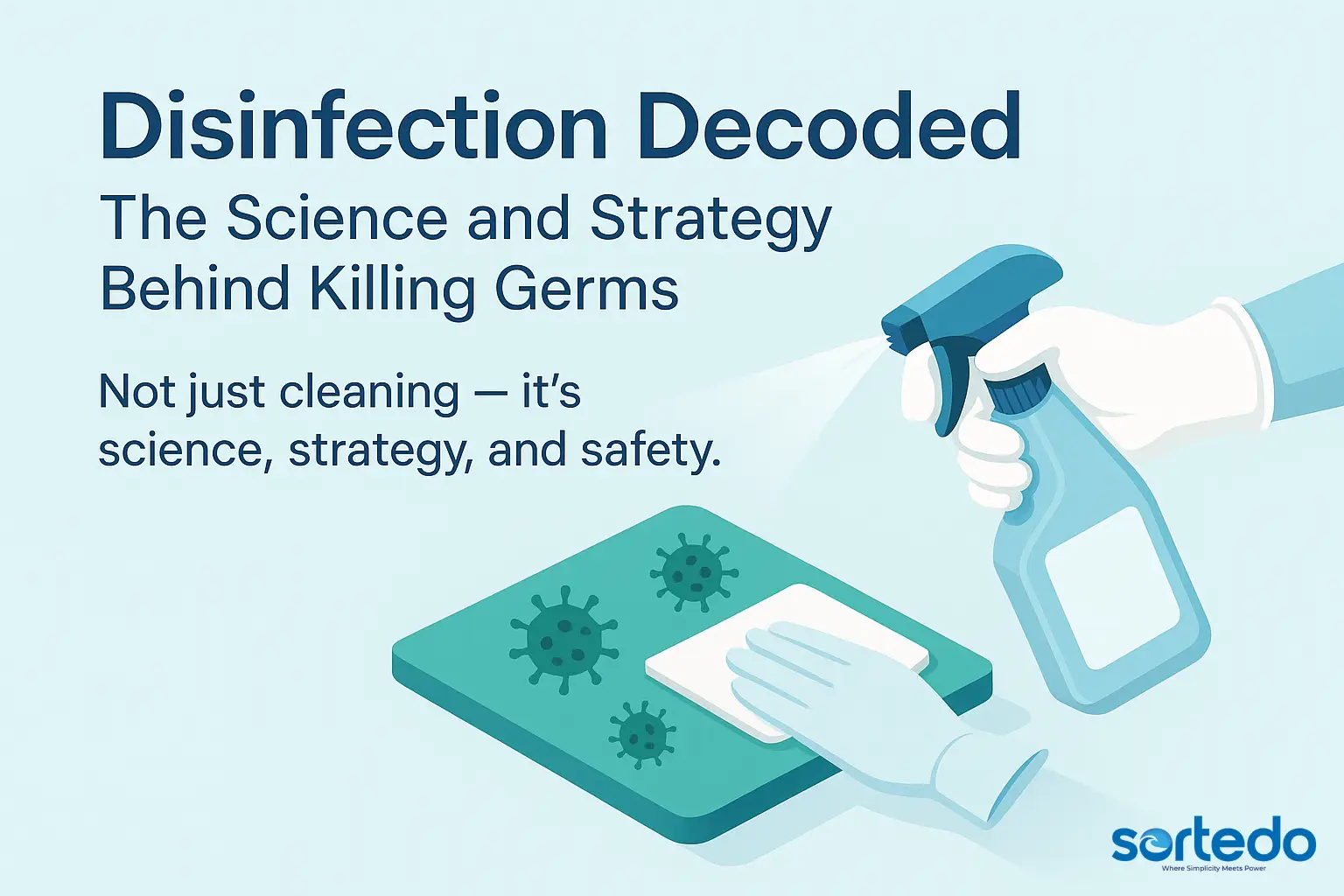
Disinfection Decoded: The Science and Strategy Behind Killing Germs
Introduction
In today’s world, the word “disinfection” has become a household term. From homes and hospitals to restaurants and offices, disinfection is everywhere — and for good reason. It’s one of the most effective tools we have to reduce the spread of harmful microorganisms and maintain a hygienic environment. But despite its popularity, disinfection is still widely misunderstood. Many people confuse it with cleaning, while others overuse harsh products thinking “more” equals “better.”
So, what exactly is disinfection? Why is it important? And how do you do it right — without harming yourself, your surfaces, or the planet? In this blog post, we’ll break down the science of disinfection, explore where and when it’s needed, and share practical tips to make your routine both effective and safe.
What Is Disinfection?
Disinfection is the process of using chemicals to destroy or inactivate harmful microorganisms such as bacteria, viruses, and fungi on surfaces and objects. Cleaning takes care of the visible mess — dust, crumbs, and smudges. Sanitizing doesn’t wipe out all germs — it just brings the numbers down to a level that’s considered safe for everyday contact. But disinfection? That’s the heavy-duty step that targets and kills the harmful microbes you can’t see — the ones that actually make us sick
For example, cleaning your kitchen counter with soap and water may remove food crumbs and visible stains, but disinfecting it ensures that invisible threats like E. coli or salmonella are neutralized. In high-risk environments such as hospitals, disinfection is not just important — it’s essential for infection control.
Disinfection also plays a key role in breaking what scientists call the “chain of infection” — the sequence of events that allows germs to move from one host to another. By targeting and killing germs at their source (on surfaces or objects), disinfection helps stop the cycle and prevent outbreaks, especially in shared or public spaces.
How Disinfectants Work
At the heart of disinfection lies chemical action. Disinfectants are formulated with active ingredients that attack microorganisms at the cellular level. Each ingredient works a little differently — like a specialized tool in a germ-fighting toolkit, with its own unique way of breaking down harmful microbes
Alcohol (ethanol or isopropyl): Destroys cell membranes and denatures proteins. Commonly found in hand sanitizers and surface sprays.
Chlorine compounds (like bleach): Powerful oxidizing agents that rapidly kill a wide range of germs. Often used in hospitals and food prep areas.
Quaternary ammonium compounds (quats): Found in many household disinfectants; effective against bacteria and some viruses.
Hydrogen peroxide: It quietly does its job, then breaks down into simple water and oxygen — no harsh residue, just effective cleaning with a gentle finish
An often-overlooked factor in disinfection is contact time — the amount of time a disinfectant must remain wet on the surface to effectively kill germs. If a disinfectant dries too quickly or is wiped away immediately, it may not have enough time to work. That’s why it’s important to follow the manufacturer’s directions carefully.
And here’s something most people overlook — the kind of surface you’re cleaning actually makes a big difference in how well disinfection works. Non-porous surfaces like glass, plastic, and metal are easier to disinfect effectively. Porous materials such as fabrics, paper, or untreated wood may require different approaches or specialized products, as germs can hide deep within the fibers.
When and Where to Disinfect
Disinfecting the right spots at the right time matters just as much as doing it the right way — it’s all about being smart, not just thorough. Not every surface in your home needs constant disinfection — in fact, overdoing it can damage surfaces or contribute to chemical exposure. The smart move? Focus on the spots your hands touch the most — because those are the same places germs love to stick around and spread.
Think of the things you and your family grab, tap, or hold all day long — those are the surfaces that need regular disinfecting.
Doorknobs and handles
Light switches
Mobile phones
Tabletops and counters
Remote controls
Faucet handles
Toilet seats and flush levers
There are a few high-priority areas that deserve extra attention — these are the spots that should be disinfected on a regular basis.
Bathrooms: Toilet areas, sink faucets, and bathroom floors are hotspots for harmful bacteria.
Kitchens: Especially after handling raw meat, eggs, or unwashed produce.
Sick rooms: If someone in the household is ill, disinfect shared surfaces more often.
Disinfection becomes especially important during cold and flu season after hosting guests , or when someone in the house is recovering from a viral or bacterial infection. However, not everything needs constant disinfection. Walls, ceilings, and windows rarely require it unless visibly contaminated.
Safe and Responsible Disinfection
Disinfection is powerful — but it should be done safely and responsibly. Misusing products can pose health risks or reduce their effectiveness. Here are essential safety practices every household or business should follow
- Take a moment to read the label — not all disinfectants do the same job, and the fine print tells you exactly what they’re built to handle.. Some go after bacteria, others tackle viruses, and a few are tough enough to handle both — it all depends on what you’re trying to fight. Check the label to ensure the product meets your needs.
- Use protective gear: Some disinfectants can irritate the skin, eyes, or respiratory system. Suit up safely — wear gloves, consider some eye protection, and always let some fresh air in while you’re disinfecting.
- Never mix products: A common but dangerous mistake is mixing bleach with other cleaners like ammonia. This can release toxic gases such as chloramine or chlorine, which can cause breathing problems or worse.
- Proper dilution: Concentrated disinfectants often require dilution. Using them too strong can damage surfaces; too weak, and they lose effectiveness.
- Eco-friendly options: Many modern disinfectants now offer plant-based or low-toxicity formulas that are biodegradable and safe for children and pets. These may include ingredients like thyme oil, citric acid, or lactic acid — all capable of killing germs while being gentler on the environment.
Quick reminder: Disinfectants are meant for surfaces — not skin — unless the label says otherwise, like with hand sanitizers. And to be safe, always keep them out of reach of kids and store them somewhere cool and dry.
Building a Disinfection Routine
Like any habit, disinfection works best when it’s part of a consistent routine — not a reactionary panic. The goal is to integrate disinfection into your everyday life without overwhelming yourself.
Here’s a simple breakdown:
- Daily Tasks: Disinfect high-touch surfaces (phones, remotes, kitchen handles), especially after cooking or using the bathroom.
- Each week, give some love to the small but busy spots — like doorknobs, cabinet handles, light switches, and those appliance buttons we constantly touch.
- Monthly/Seasonal Tasks: Deep-clean and disinfect less-accessed areas like air vents, under beds, behind appliances, and storage bins.
Pro Tips for Maintaining Routine:
- Use a spray-and-wait method: Spray disinfectant and leave it untouched for the required contact time before wiping.
- Clean first, disinfect second. Dirt, grease, and organic material can block disinfectants from working properly.
- Use checklists or mobile apps to stay organized and consistent.
- Rotate products occasionally (if using chemical disinfectants) to prevent residue buildup or microbial resistance.

 by
by 
Add comment