Are today’s cleaning practices really good enough?
Introduction: When Cleaning Is a Responsibility, Not Just a Habit
Every one of us wants to start our day with a clean environment — sparkling tiles, a fresh scent, and a clutter-free floor. But have you ever wondered if what looks good is really clean?
Appearance-cleaning is no guarantee of true hygiene.
The world has moved beyond just wiping down surfaces. It’s time to understand that cleaning is not just about removing dirt, but also about getting rid of bacteria, viruses, and other dangerous germs. And this is where our modern cleaning practices often fail.
🔍 10 mistakes that make today’s cleaning incomplete
1. Cleaning, sanitization and disinfection — they are not the same thing
For most people, these three words mean the same thing — but they shouldn’t. But the reality is that:
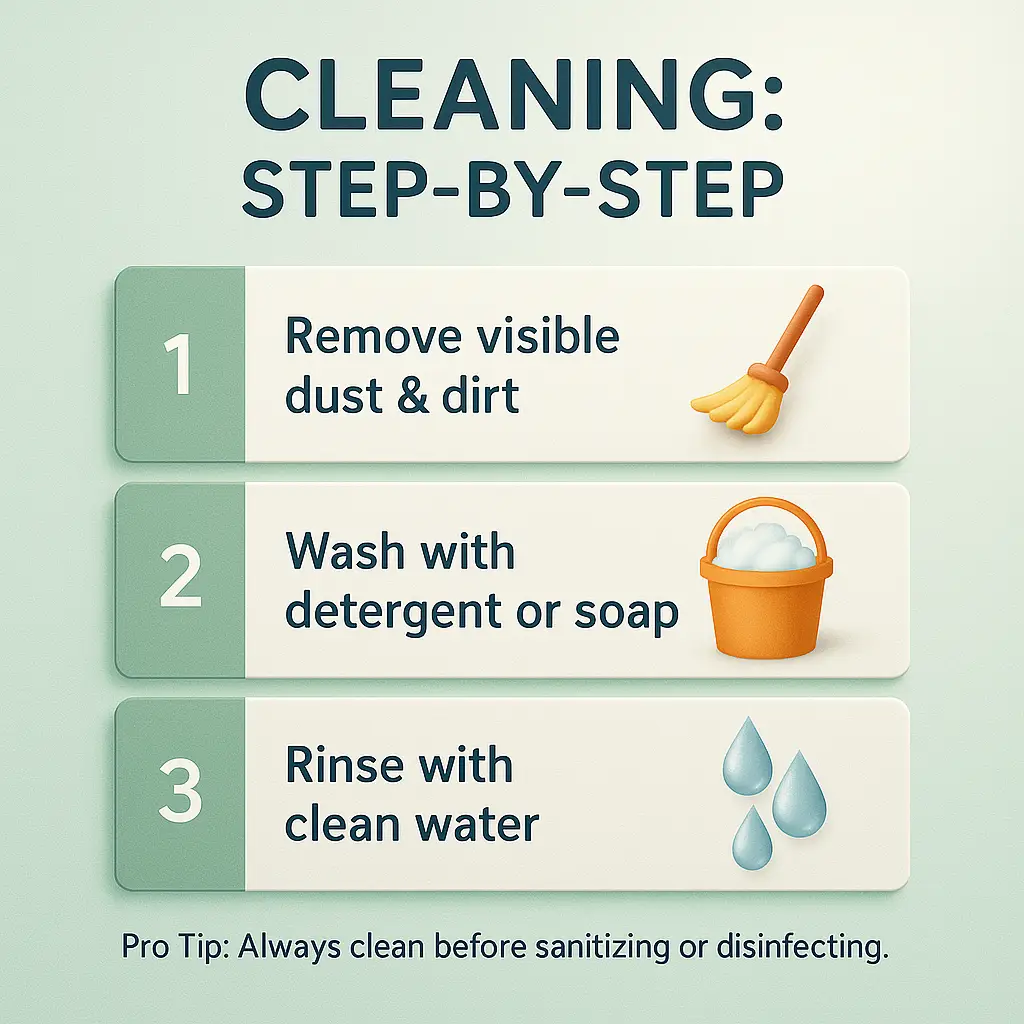
Cleaning only removes dirt or dust
Sanitizing reduces the number of germs
Disinfecting completely kills bacteria and viruses
When these three processes do not happen simultaneously, cleaning remains incomplete.
2. What shines is not always safe
Many times the cleanliness in the house or office “looks” so good that we assume everything is fine. But the real danger lurks where we do not see — like viruses, which can survive for hours or days even on clean surfaces.
3. Neglecting high-touch points
Have you ever disinfected your phone, TV remote or door handles daily? Probably not. These are the places that are touched frequently during the day, and this is where the risk of infection is highest.
4. Irregular cleaning schedule
Not everything needs to be cleaned daily, but there are some places that need to be cleaned regularly and frequently — like bathrooms, kitchen platforms, toilet seats, dustbins, etc. Most people are unable to maintain this consistency.
5. Using low-quality or harmful cleaning products
Cheap products are more attractive, but their effectiveness is less. Sometimes they can even harm surfaces and our skin. This is why brands like Cronox are becoming people’s choice today — which are both effective and safe.
6. Inadequate training — when the cleaning staff is not aware
Often in commercial setups or offices, cleaning staff do not use the right product or clean in the right way. Using the same mop all over the office or adding the wrong chemicals — these are common and dangerous mistakes.
7. Lack of public awareness
People do not know how long a disinfectant should be left on a surface (contact time), or which product to use where. The biggest barrier to real hygiene? Misinformation — or no information at all.
8. Lack of technology
Today, high-tech tools like UV-C lights, ATP swabs and electrostatic sprayers are available — but they are still unheard of in households and small businesses. Moving towards smart cleaning is the need of the hour.
9. Hygiene out of reach of rural and low-income groups
In villages and towns, cleaning is still done with ash, mud or just water. Lack of quality products and information leads to diseases in these areas. Hence, accessible and effective solutions are essential.
10. Forgetting air cleanliness
We scrub the surfaces but forget the air — the invisible mess we breathe every day. Dust mites, allergens and viral particles enter our body through breathing. Air purifiers and HEPA filters aren’t luxuries anymore — they’re essentials for healthy living.
So what to do?
Consider cleaning a scientific process rather than a mere “show-off”
Choose the right products (like Cronox’s Multi-Surface Disinfectant)
Focus on cleaning both high-touch surfaces and the air
Spread awareness — train your family and employees
Invest in smart cleaning tools
Conclusion:
Cleanliness is no longer just an activity, it is a responsibility – for ourselves, for our family and for society. Looking clean isn’t the same as being clean — and safety depends on knowing the difference.
This is what Cronox is all about – to make you truly hygienic, not just “clean”. So, let’s say together:
“Bring intelligence to cleaning, go with Cronox!”

 by
by 
Add comment