
The Trifecta of Hygiene: Cleaning, Disinfection & Sanitation
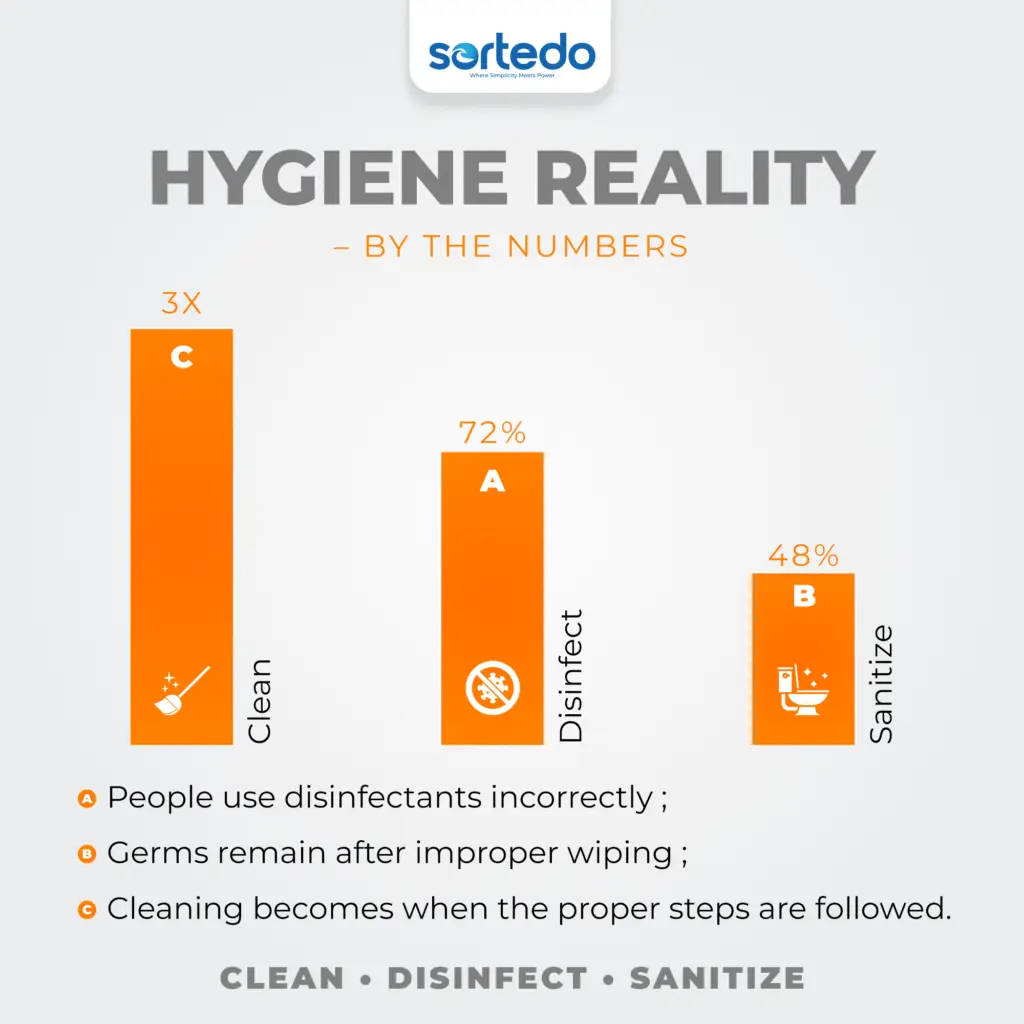
Introduction: Why Clean Isn’t Always “Clean”
We live in a world where a shiny surface or pleasant fragrance is often mistaken for cleanliness. But true hygiene goes far beyond what we can see or smell. Think about your phone screen, kitchen slab, or office desk. Even if they look spotless, they might be teeming with invisible bacteria and viruses. That’s where the Trifecta of Hygiene comes in — a simple but powerful three-step method that ensures not just visual tidiness, but actual microbial safety. Whether you’re managing a home, hospital, school, or commercial space, this system can help you stay ahead of health risks.
Cleaning – Just the Tip of the Iceberg
Cleaning is where it all begins. It’s how we clear away life’s daily mess — from spills to smudges, crumbs to grease.. This can be done using water, detergent, soap, or even just a damp cloth. While it doesn’t kill germs directly, it drastically reduces their numbers by wiping away the environment they thrive in.
For example, if a kitchen counter is covered in food residue, germs multiply quickly. A thorough cleaning removes this food source, reducing the likelihood of microbial growth. In short, cleaning is about preparing the surface — not finishing the job. It’s the foundation of hygiene, and without it, everything else fails.
Why Cleaning Alone Isn’t Enough
Here’s something most people don’t realize: you can’t disinfect dirt. Imagine spraying a disinfectant over a dusty table — the dust creates a barrier that prevents the chemical from reaching the germs underneath. That’s why every hygiene protocol, no matter how advanced, begins with good old cleaning.
Think of cleaning as brushing your teeth — it’s the routine that keeps things manageable. But to get rid of deeper issues like bacteria or plaque buildup, you need more than just brushing. The same logic applies to surfaces. Cleaning handles the obvious — the rest comes next.
—
Disinfection – Invisible, But Non-Negotiable
Once a surface is cleaned, disinfection steps in. This is where you eliminate germs that are too small to see — the bacteria, viruses, and fungi hiding out of sight. Disinfectants are specially formulated chemicals that either kill or deactivate these microorganisms, rendering them harmless.
Take this example: after a guest sneezes on a dining table, you may wipe it clean, but germs from that sneeze can linger. A proper disinfectant spray will neutralize those lingering threats. Especially in shared spaces — like restrooms, kitchens, offices, or public transport — disinfection isn’t just recommended, it’s essential.
Did You Know?
A study conducted in a large hospital in India found that regular disinfection of high-touch surfaces (like door handles, switchboards, and lift buttons) reduced the number of hospital-acquired infections by nearly 30% in under six months. That’s the power of a simple routine done right.
Disinfection, when used correctly and consistently, can be the difference between a safe space and a sick one. However, it only works if the surface is already clean — which is why the first step matters so much.
Not All Disinfectants Are Equal
When it comes to disinfectants, one size doesn’t fit all. Alcohol-based disinfectants work great for electronics and quick drying surfaces. Bleach solutions are strong and suitable for bathrooms or contaminated areas. But they all have one thing in common — they need proper “contact time.”
It’s the wet time a disinfectant needs to effectively destroy germs — not just touch them. If you spray and wipe immediately, you might not be giving the product enough time to do its job. Always check the label — it might say 1 minute, 5 minutes, or more.
Sanitation – The Ongoing Process
If cleaning starts the process and disinfection takes action, sanitation is how you stay ahead. It’s about keeping things clean over time — not just once a day, but always. Sanitation includes everything from regular handwashing to proper garbage disposal, toilet maintenance, and air circulation.
In simple terms, sanitation is the process of keeping an environment hygienic on a consistent basis. It’s what prevents recontamination and ensures long-term safety. For example, in a restaurant, sanitation includes ensuring food waste is disposed of daily, toilets are cleaned regularly, and staff follow strict hygiene rules.
Think of It This Way
We clean to see the shine and feel the difference — it’s about making a space look fresh and feel right You disinfect it to kill harmful germs that may remain.
You maintain sanitation to keep it that way — today, tomorrow, and beyond.
It’s a cycle that must keep repeating. Break one link in the chain, and the system fails.
Sanitation in Real Life: Toilets, Schools, Streets
In India, sanitation is more than a personal habit — it’s a public mission. The Swachh Bharat Mission dramatically improved sanitation access in rural areas, building over 100 million toilets since 2014. But building toilets isn’t enough — they must be cleaned, maintained, and used properly.
In schools, sanitation impacts everything from student attendance to performance. Studies show that schools with better sanitation facilities have higher attendance rates, especially among girls. Clean toilets = dignity + education.
The Business Impact of the Trifecta
This hygiene framework isn’t just about health — it’s smart business. In a survey of Indian office workers, 78% said they feel safer and more productive in clean, well-maintained workplaces. Offices that implement daily disinfection and regular sanitation routines report fewer sick leaves and higher employee morale.
In the hospitality industry, reviews often mention cleanliness before food or ambiance. When a place looks truly clean, people notice — it builds trust, makes them feel comfortable, and keeps them coming back. Customers remember when a place feels hygienic — and when it doesn’t.
Hygiene Psychology: Clean Looks vs. Clean Reality
We’re all naturally biased to believe that if something looks clean, it is clean. But scientific research shows that visual cues are misleading. A countertop can sparkle and still harbor millions of bacteria if not disinfected. That’s why this trifecta model is so powerful — it forces us to go beyond surface-level assumptions.
True cleanliness requires intention, not just appearance.
How to Put the Trifecta to Work in Any Space
Here’s a simple framework anyone can use:
| Step | What to Do | Tools Needed | Frequency |
| 1. Clean | Wipe surfaces, remove dust and spills | Cloth, detergent, water | Daily (or more often) |
| 2. Disinfect | Apply disinfectant to high-touch areas | Alcohol-based spray, bleach solution | 1–3 times daily |
| 3. Sanitize | Maintain hygiene, handle waste, ventilate air | Handwash stations, bins, toilet cleaner | Ongoing |
Future of Trifecta: What’s Coming Next?
With new technology, hygiene is going smart. You’ll now find smart tools like sensor-based dispensers, UV-cleaning robots, and electrostatic sprayers popping up in places like airports, malls, and hospitals — making hygiene more high-tech than ever. These tools ensure uniform coverage, reduce chemical wastage, and improve efficiency.
Also trending: eco-friendly hygiene. More consumers are choosing biodegradable wipes, plant-based disinfectants, and refillable cleaning supplies. It’s no longer just about being clean — it’s about being clean responsibly.
CDS is a Habit, Not a One-Time Task
The Trifecta of Hygiene — cleaning, disinfection, and sanitation — is more than a checklist. It’s a mindset. One that recognizes that visible dirt is just the beginning, not the end.
When practiced together, these three steps protect not just our spaces, but our health, our families, our employees, and our communities.
So next time you clean a surface, ask yourself: Is it really clean? Or just cleaned?
Make the trifecta your new normal — because real hygiene goes deeper than looks.

 by
by 
Add comment